A Faith-based Approach Testimony of Translating the Albanian Bible
Albania was the last communist regime to fall in Eastern Europe in 1991. Some missionaries started coming into the country to preach the gospel. I came in contact with one of them, Jeff Bartell, in 1992. Jeff was sent out of Decatur Baptist Church to start a church in Tirana, the capital of Albania. He led me to the Lord and discipled me. At the time, there was no full Bible in Albanian. Jeff would preach from the KJV and do his best to translate the verses with his translator beforehand in Albanian. We prayed that the Lord would give us His words in our language. In 1994, the first full Bible translation came out, a work of a Swiss group that translated primarily from the “Nuova Diodati” in Italian. We rejoiced in the work and embraced that Bible. The team that worked on that translation were competent in translation, but not in theology. There was a void of understanding of even simple biblical concepts and words due to the lack of access to any such resources during communism. Everyone understood that this work would need a revision to bring more accuracy and clarity of the biblical text.
I served in church in whatever area there was a need. In the early years, there was a need in every ministry: kids, youth, students, outreach, etc. I served in all of them, eventually teaching in our Bible Institute. Jeff had taught us how to study the Bible — the rules of how we could study for ourselves. This was difficult with our Albanian Bible. Words weren’t always consistent, and sometimes, some weren’t even there. We kept praying for the Lord to give us His pure words. We always prayed for somebody else to do this work, until around 2019, we realized that nobody was doing this work. Meanwhile, the Lord had raised up a generation of believers that understood sound doctrine and had the skills to take on this work. We made ourselves available and prayed for God to use us for this work if it so pleased Him. We met with four other Albanian pastors from our ministries to share the burden and discuss if we should pursue this work. We were all in agreement that this work was needed and God had prepared us for this work.
Once we shared our burden, there was overwhelming support. Everyone understood that this work had to be done. Years of studying, teaching, and preaching had prepared the way. Language and computer skills came in handy when the work started. One of the first questions we had to address was how do we actually start the work? We were clear on the translation approach: formal equivalence (word for word) is the only approach to stay true to the text and not inject personal opinions or words during translation. The question still remained, however, where do we start? Our research into how other such projects were started showed us that the most common approach is to start with a New Testament book, maybe from the gospels, and continue with other books until the New Testament is finished. Most would also print and distribute the New Testament before the whole Bible is done translating. While we understand the reasons for this approach, we believe the Lord was leading us a different way.
Because we believe that every word of God is pure (Ps. 12:6; Prov. 30:5), we had to have a system where we were keeping track of how each word was being translated. We build word trees with words similar in meaning to help us not conflate words that are close in meaning but have a different nuance or pivot a certain way. We built a platform to help us with all the details of taking a “words-first” approach to translation. This meant that we would not start translating a certain book of the Bible, but rather, make a list of all the words in the Bible and study each word before we translated a single verse.
The studying of each word took time. We used the King James Bible as the source text, and each word was studied, not only in how that word is used in the KJV from the beginning to the end, but we also worked with Strongs’ numbers to gain a broader understanding of how each word correlated to Hebrew or Greek words. We worked with etymology and word-synonyms dictionaries, and we compared other TR based translations in other languages, contemporaries of the KJV (1602 Reina/Valera, 1607 Diodati). During this time, we held regular consultations with pastors on both sides of the ocean, discussing specific words with options for the right translation. This exhaustive work took thirty months. Still not a single verse translated. Each word was accounted for. We did let none of his words fall to the ground (1 Sam. 3:19).
Once this was completed, we were able to move quicker with the translation of the text because we had already resolved how each would be translated in context. Working on each word first, gave us the ability to work on a Bible dictionary in Albanian and develop other tools that are a great help for studying. While there are many resources for English speakers for studying the Bible, there is very little available in Albanian. We have released a website with the new Bible as well as mobile apps for iOS & Android. These tools work great with this translation. Being able to search and follow each word consistently throughout the text is new in Bible resources for Albanian believers.
The printed Bible was introduced to the evangelical community in Albania in May of this year. Over 10,000 full Bibles have been given away for free to churches with many more planned for this year. There’s still a great need for training, explaining the new Bible, the importance of individual words, how to use the study tools, an audio recording of the Bible, and much more. The Lord has brought together many churches and individuals to contribute to different parts of the project. It has been a blessing seeing the body of Christ come together like this, making an effort to make a difference. Some churches have already made this Bible the final authority for their churches, while others are still considering it. The Lord has opened many doors, and much prayer is still needed. We are grateful to anyone who has contributed to any form for this to come to fruition. The fruit of it will be seen at the Judgment Seat of Christ. Praise be to God for allowing us to have a small part in what gives Him glory.
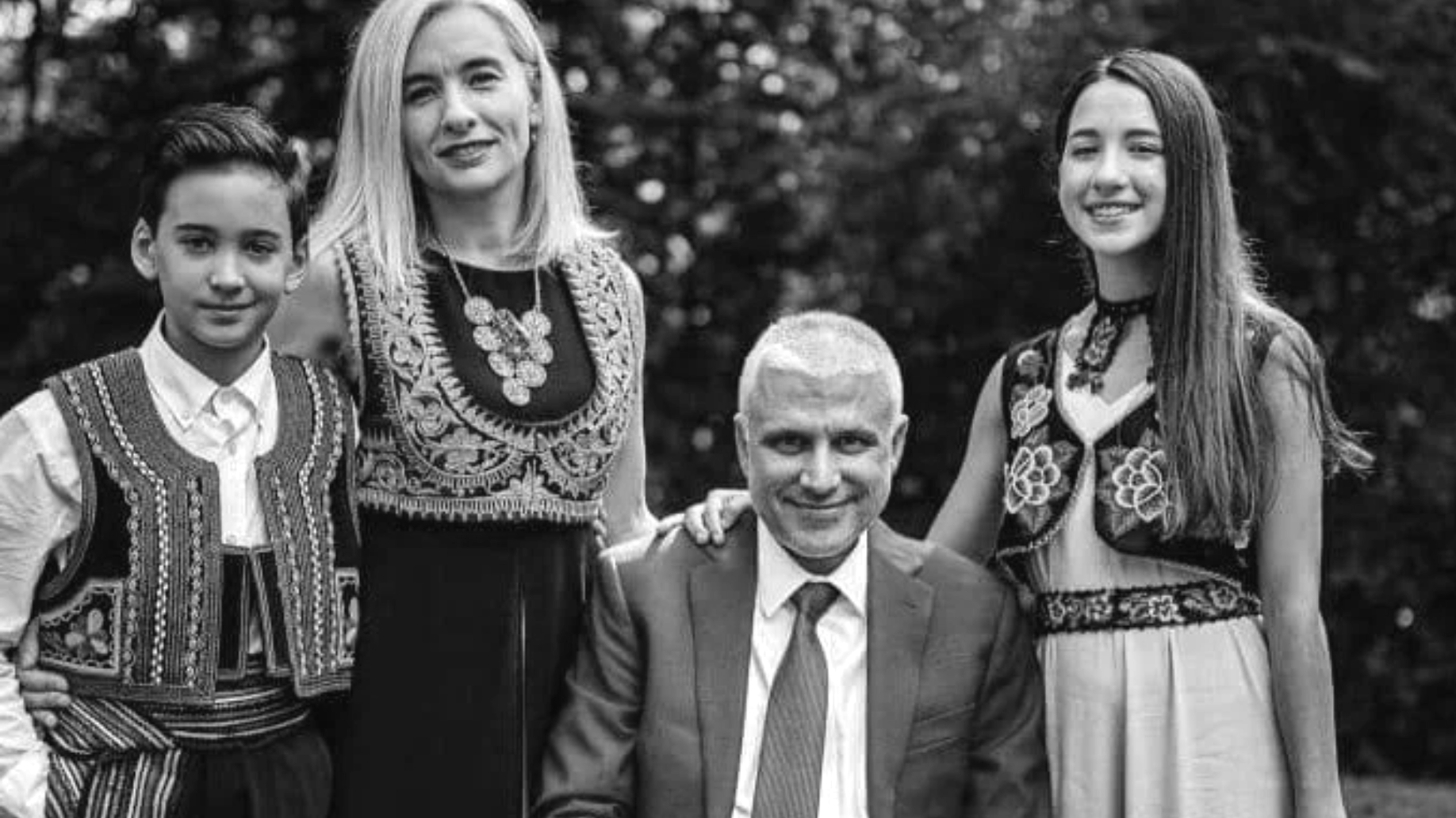
Erion Volgi helps lead the Albanian Bible Project.