The Father of Fatherless
Gen. 2:18
And the LORD God said,
It is not good that the man should be alone;
I will make him an help meet for him.
Marriage is such a wonderful gift from a gracious God. In what one would imagine to be an arduous task of naming all the animals, God allowed Adam to see that with each name he assigned, he had done so to a pair: male and female. In Adam’s lack, God gifted him Eve. The first wedding took place in a garden, with creation’s High Priest himself officiating the ceremony. Alongside many of God’s other gifts, his great gift of marriage was never meant to be an end unto itself, but rather to see his glory multiplied through its use (1 Cor. 12). This is why God’s first command given to Adam and Eve is “Be fruitful and multiply” (Gen. 1:28) — they were to see the image of God proliferated through the earth by the means of the gift God had given them.
That is what makes infertility so utterly devastating. In the face of this aberration of the natural order, the love within a marriage fails to reproduce. Both the desire and command of God leave the warm love of a married couple to feel a lonely, bitter coldness in the presence of an empty nursery. My wife and I began to face that frigid reality a couple years into our marriage.
Perhaps it’s because she is more spiritual than me that JJ (my wife) was interested in foster care and adoption prior to us ever being together. Though I was never against this route, per se, I was hesitant simply because it was never the way I had imagined becoming a parent. In this season, God had to do a work on my heart. If we were going to become foster parents, I knew I needed to hear clearly from the Lord on the matter. If I was going to raise kids in my home, they could never, under any circumstances, be “Plan B.” So, after seeking the Lord, God gave me peace: fostering became “Plan A,” so to speak, because it was God’s plan. His heart for the fatherless, clear throughout scripture, slowly began to invade my own heart.

Psa. 68:5
A father of the fatherless,
and a judge of the widows,
is God in his holy habitation.
The process began. We had social workers in our home making sure we had a fire extinguisher; background checks and reference letters from ten-something different people in our lives; and a few months of online zoom classes on parenting. The latter, I say, is comparable to a soldier taking bootcamp online before being sent into combat. In total, after about nine months, we officially received our fostering license on a cold February day at about 4:30 p.m. By 7 p.m., we had two brothers in our home: Tim (2) and Theo (7) at the time. Remembering this moment brings me to tears out of the deep joy these boys brought us and JJ and the deep sorrow that they are no longer a part of our family. In the grand scheme of our lives, this proved to be a holy moment … and we didn’t have snacks.
I remember crying on the way to Walmart, pouring out my heart in gratitude to the Lord that he would bring these children into our life and home, that he would count us worthy to be these boys’ parents, if only for a season. Despite having only met them, I loved these kids with my whole heart. I had soon returned with Takis and PopTarts; we snacked, played with toy dinosaurs, watched a movie, and got the boys tucked in for bed. JJ and I lied there, astonished at having just become parents of two with about three hours’ notice.
Those precious brothers were in our home for about four months. In that time, Tim turned three, and Theo learned to ride his bike. Over those months, these two boys got to learn about Jesus; not only did they learn about him in Midtown’s wonderful children’s ministry, but they got to hear about him and his word over the meals that we ate together every day. Theo was becoming ripe for salvation, wrestling with the terms of the gospel and what it meant to believe; Tim had stablished in his tender heart the facts that Jesus loved him, died for his sins, and rose from the grave three days later. And then they left.
As difficult as going from zero to two kids was, I would choose that a million times over going from two to zero. In this season, we were getting more sleep, but the new silence in our home was even more excruciating than it had been in the days of infertility alone. We would easily take the noise of children over that silence any day.
After a few months of a quiet home, in September, on my birthday, God brought Isaiah into our lives. At the time, he was two, had the sweetest heart imaginable, and was filled with all the energy in the world. We got breakfast at IHOP that evening to celebrate. So far, I can’t imagine anything beating my 29th birthday.
It was an incredibly fun fall and then our first Thanksgiving and Christmas with a kid. Having children really brings some magic back to the holidays, especially getting to see our boy open up his presents. The love and warmth that God had given us as a married couple was now getting to be a part of God’s intended design: being the environment for children to grow up in.
And so, in January of this year, God brought Avery into our home. He was three days old, fresh out of the hospital. Receiving an infant was immediately a different experience than our other foster kids. Being up in the middle of the night to feed Avery was at once exhausting and extremely precious.
At this point in time, we’ve had Avery for six months and have almost had Isaiah for a year. As of this week, it looks like we will very likely get to adopt Isaiah some time this fall. When we do, we plan on throwing a huge party to celebrate him — he’s probably rooting for a Lightning McQueen cake and will probably get one.
Avery’s situation is different … though the state determined that he needed to be taken out of his home, it’s not yet clear whether improvements will be made and if he will go back or stay with us. And so right now, we are called to love and care for a baby that may not remain in our care. This is the excruciating reality of foster care. While I imagine all Christian parents come to this at some point in their life, foster parents have to reckon early and quickly with the reality that our kids are not our own.
Psa. 127:3
Lo, children are an heritage of the LORD:
and the fruit of the womb is his reward.
This may sound dramatic, but the best way I can explain it is that it is as though our baby has a potentially terminal illness. At some undetermined point in the future, we may no longer have the opportunity to love this baby, to feed and care for him. And so, we are called to prayer and grief. We pray desperately God’s will be done, for what’s best and right for our baby and his biological parents. We also grieve. We cry out to God that he will help us with the uncertainty and ultimately to simply trust him as our Father and the father of the fatherless.
Foster care is awesome, though it is not easy. And yet, it is an intrinsically Christian work. While many cultures throughout history and location have ostracized and taken advantage of the fatherless, God has fiercely defended them and has historically done so through Christian individuals and institutions. One need not look very far in Christian history before they find early Christians taking in abandoned babies into their care or George Mullers establishing orphanages to raise the fatherless in the name of the Lord Jesus.
Jas. 1:27
Pure religion and undefiled before God and the Father is this,
To visit the fatherless and widows in their affliction,
and to keep himself unspotted from the world.
At this very moment, there are individuals with terrible beliefs and ideologies that are getting their foster care license. Some of these individuals may have good intentions, some do not. At best, kids brought into these homes will be shuffled through, perhaps adopting some form of humanistic altruism from their secular foster parents. At worst, kids could be taken advantage of because bad people with bad intentions slip past safeguards. Many people in our society view children as commodities: something to be added to their life, image, and brand, comparable to a pet or a boat. We alone, as Christians, are able to see children as the eternal, infinitely valuable, intrinsically unique souls that they are.
My prayer is that Christians — actual, born again, followers of the Lord Jesus Christ — would take up the historically Christian cause of caring for the fatherless, an ever-increasing demographic in our increasingly godless society. I pray that Christians open not simply their homes to “help the community” and pat themselves on the back, but open their hearts and see that the fields are white unto harvest, that there are children who would easily believe on the Lord Jesus Christ for salvation if they simply had Christian parents to raise them to do so.
Christian, I would ask you to consider how you can minister to the fatherless. In America, it seems we are quick to give money, but slow to give ourselves. We all know a family that has that “accident” child that is remarkedly younger than the other kids in the family. Yet, none of those families could now imagine themselves without that wonderful child now. My point is that there are many Christian families that, in all likelihood, do have room for one more child. The economy will never be good enough. Yes, the children who would enter your home may have some serious trauma, but who better equipped to address those issues than Bible-believing Christians that have been entrusted all things that pertain unto life and godliness (2 Pet. 1:3)?
If, as you seek the Lord, you don’t actually have room in your home to foster or adopt, be at peace. God has not called all to this ministry. I would encourage you to see how you can be a part of ministering the gospel to the fatherless. Start with your local church. Perhaps they have respite nights that minister to foster families; maybe they support orphanages in third-world countries. If there are foster families in your church, ask them what would be helpful in ministering to families such as theirs as well as the fatherless in your community.
As Christians, God has adopted us into his family. He has given us the Spirit of adoption. If God is the father of the fatherless, I wonder if we would be willing and radical enough to have his heart.
Psa. 27:10
When my father and my mother forsake me,
then the LORD will take me up.
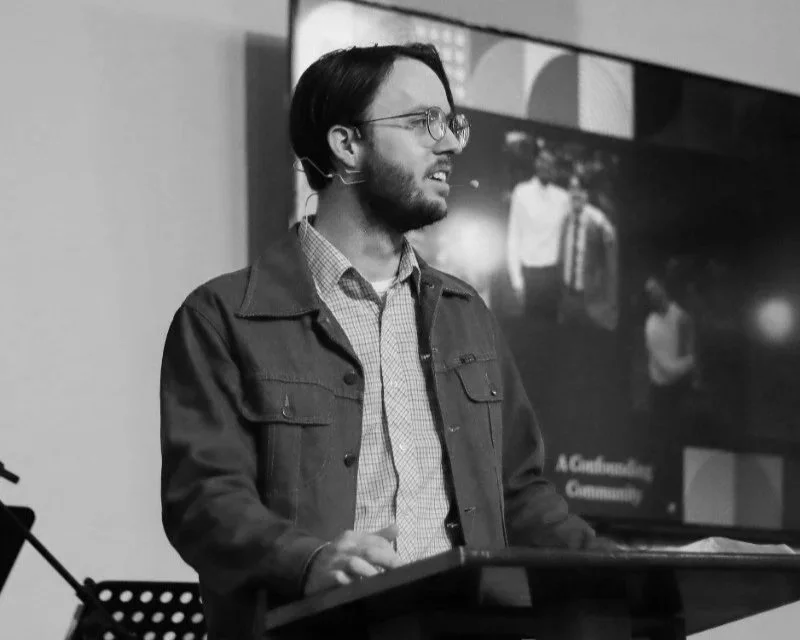
Seth Harper is a faithful member of Midtown Baptist Temple in Kansas City, MO.