A Generation of King James Kids
On November 25th of 2025, our Kids’ Ministry kids and their parents were competing in what we called the “Faith Family Feud.” If you were a guest, the front of our stage was lined up with chairs, the PowerPoint was a flashy template, and you’d quickly understand this was one of our occasional Tuesday night prayer services that we call Family Prayer Night. In addition to the expected prayer and praise, on these nights we’d invite the kids from the Kids’ Ministry upstairs to join service and pray with their families. Usually, we’d add a game or activity to help engage the kids and also remind the rest of the church that while our kids are being established on the same foundation as the local church — the establishment of that foundation is strategically specific to our kids’ age and stage.
On this particular night, fun questions were asked by the kids and presented to the church. Who is the strictest teacher in our Kids’ Ministry? Describe Pastor Will in just one word. Which of your teachers is single and needs to get married, ASAP? These were fun questions that came along with fun answers and brought laughs to the congregation. One of the fun ones was the theologically complex question of “What is dispensationalism?”, and it was presented to our kids with the expectation that they’d have no idea what the subject was. Their clueless answers were supposed to be amusing to those Living Faith Bible Institute students who understood the doctrine of dispensationalism. And yet, when I prepared the PowerPoint, I was surprised and humbled at the answers from our 4th and 5th grade class.

They were not eloquent, but several kids in the class had the ability to describe dispensationalism clearly:
“Oh, that’s grace, uh, the law, the different times in the Bible.”
“Adam and Eve was innocence, and then Jesus is the grace.”
“I only get one word? It’s like... God’s relationship with us. Relationship?”
A few months prior, one of our young, bold teachers had brought the subject up in class and given a brief explanation of the complex doctrines of dispensationalism, and it had stuck. I don’t want to exaggerate and pretend that these kids now rivaled theologians, but several in the class recognized the concept and had begun building a framework of a subject that many would consider “too much” for our kids. These same kids often surprise us with their grasp of the Word; their ability to memorize verses in the King James Version; practice going through the Romans Road to share the gospel with their friends; and engage, in what we call “mini-ministries,” reproducing the ministries of the larger church in their classrooms. I want to encourage you with what we’ve found repeatedly: that the children of our church are able to handle the truth that God has for them through the word. The next generation of our local church is being trained up with the King James Bible.
The Same Foundation
Matthew 18:1-3 At the same time came the disciples unto Jesus, saying, Who is the greatest in the kingdom of heaven? 2 And Jesus called a little child unto him, and set him in the midst of them, 3 And said, Verily I say unto you, Except ye be converted, and become as little children, ye shall not enter into the kingdom of heaven.
Matthew 18:2 is one of the passages in which Jesus establishes children as fellow disciples by setting a child in the midst of the disciples. As you read your Bible, you’ll notice example after example that children are not excluded from a walk with God. In fact, when we see them in the Bible, we see extra effort is made to invite them to a genuine relationship with God. Deuteronomy 11:19 instructs us to teach our kids of God and His works constantly — and yet many well-meaning parents and teachers can be led astray by a notion that the age of a disciple can change the foundation of their relationship with Christ. Spoiler: it doesn’t.
We know scripturally that we as adults are not made right with God by knowing all the right things (1 Cor 8:1); performing perfectly (Rom 7:15-20); and certainly not, by diluting our walk with God to a level where it is easy to meet lowered expectations (2 Cor 4:8-9). And while a walk with God is a wonderful lifelong journey, it is often filled with hardship and growth on our part. Our culture, on the other hand, preaches that for a thing to be good, it must feel good and come without too much hardship. This is not what the Bible says about our walk with God, nor our children's walk with God!
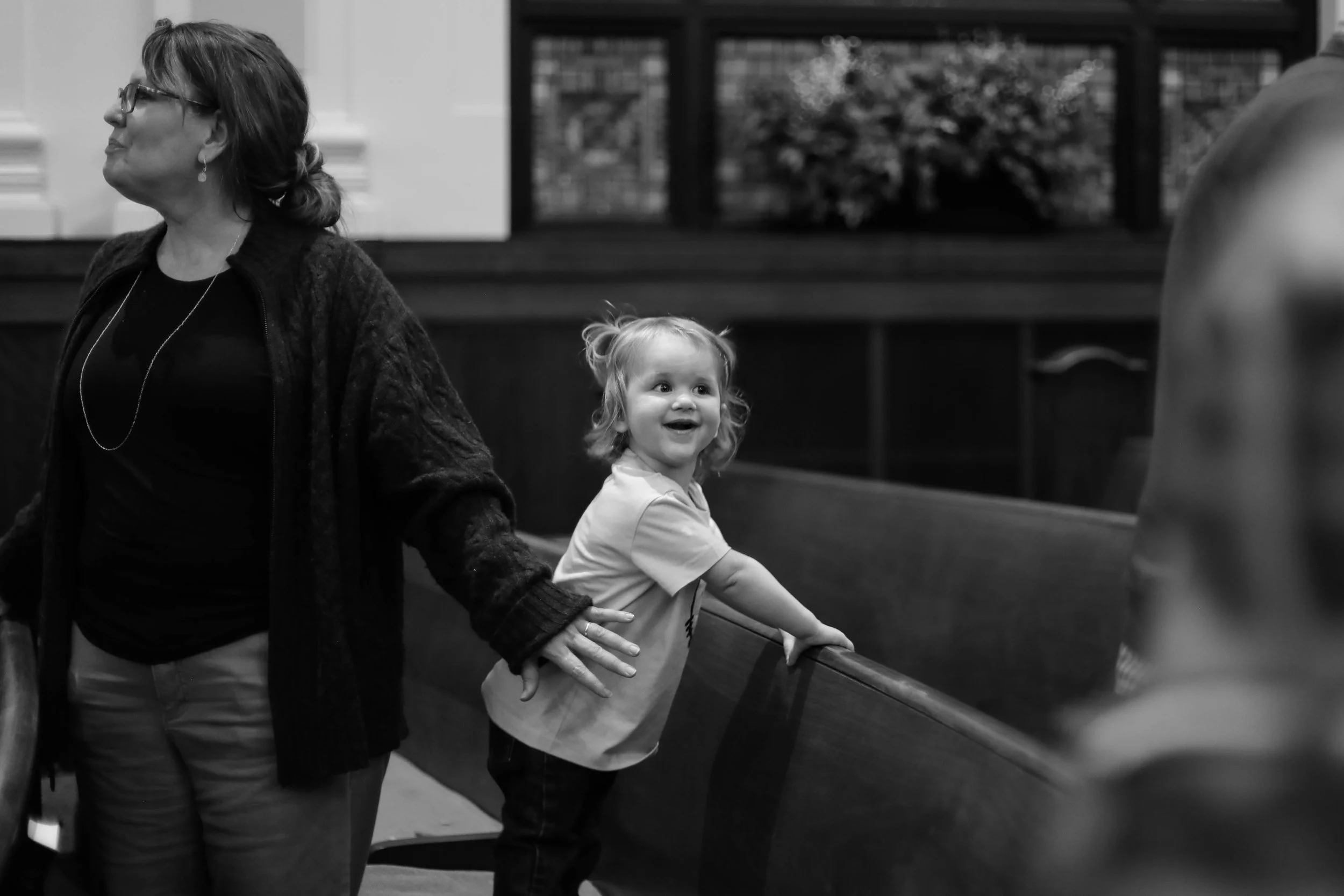
When an adult gets saved and struggles, our response is appropriately to point at the change they need to make to line up with the Word. Very often when our children struggle, our response is to point to everything around them to try and make their walk more comfortable or “accessible.”
Discipleship in our children must be built on the same foundation as discipleship in our adults, because WE are not the most important part of our discipleship: Jesus is! Our age and stage of growth does not change who Jesus is and the weight he carries in our personal walk with him. Cultural trends, people's individual circumstances, and expectations all change and provide weak foundations.
There are other places you can look to for information on the KJV and why we use it at our local church here at Midtown Baptist Temple. For the sake of this article, I'm going to assume you are already on board, and we will focus on why and how we teach the KJV to our children. We use the King James Version in our Kids Ministry because we treat it as the perfect, preserved Word of God with our adults. We ask our kids to serve in ministry, to praise God with song, and yes, even to tithe because these are instructions based on the word of God. We aren’t trying to tame the Word of God for our children, we are training our children for the Word of God.
Strategically Specific Ministry
Deuteronomy 6:5-7 And thou shalt love the LORD thy God with all thine heart, and with all thy soul, and with all thy might. 6 And these words, which I command thee this day, shall be in thine heart: 7 And thou shalt teach them diligently unto thy children, and shalt talk of them when thou sittest in thine house, and when thou walkest by the way, and when thou liest down, and when thou risest up.
I’ll admit, not all of our Kidtown classes use the KJV. Our Nursery and Crawlers classrooms, consisting of kids who cannot yet understand English or language of any kind, do not have a sermon exegeting an Authorized Text in their Sunday service. As an experiment for the sake of this point, I attempted to teach a short sermon to our nursery babies on our King James Version reading of Romans 7:15-20, and found that their retention, awakeness, and ability to tithe were sorely lacking. From the moment we begin preparing lessons for the kids in our ministry, we do so from the KJV. This doesn’t mean we use the KJV the exact same way for each class. Think about the difference between a pastor preaching from the Bible, a leader hosting a Bible study, or even parents studying on their own. The same book provides a multitude of ways to interact with it.
Every preacher who stands in front of the church and opens the Word will explain and expound on what the passage is saying. No message I’ve ever heard was 30 to 45 minutes of non-stop Bible reading, and I wouldn’t advocate for it. Even Jesus himself would often give a short statement and then explain it in further detail to his disciples (comp. Mark 4:34). We do the same in our Kids’ Ministry. Our job is not to replace the words in the Bible, but to define and give context for them. The King James Version, once defined, is no hindrance to understanding or growing in their walk with God. If anything, the additional time spent learning the language allows them to become more intimately acquainted with the concepts the verse is presenting.

I want to tell you what we practically see in our ministry. Our kids interact with that same KJV Bible that their parents do, although that same Bible is applied strategically in each class based on their age and ability. Our youngest classes will get a verse (Colossians 3:20, for example), and we’ll pull a concept out.“Children, Obey!” They sing songs about “fear not” and hear lessons on the 10 commandments including “thou shalt not steal.” These are KJV phrases and words that the teachers present and explain at their level of understanding. As the children grow, they’ll get more context for those verses and eventually be expected to memorize them and read full passages and share their thoughts. We happily allow story books and other material that build off that same biblical foundation (for example, a children' s Bible that tells the full story of Noah with “Noah built an ark” and a picture of a bunch of animals), but we maintain the KJV Bible as the core of what we do. At every age, our teachers use the KJV’s English and provide more definition and explanation. At every age, they are able to grow and understand more of what the Bible is teaching them. If this sounds familiar, it’s because this is the path we take learning anything in life, child or not!
John 1:1 In the beginning was the Word, and the Word was with God, and the Word was God.
Proverbs 22:6 Train up a child in the way he should go: and when he is old, he will not depart from it.
We have the awesome privilege of helping equip and train the next generation of disciples. The word we use in that training impacts the next generation as they move from being ministered to ministering themselves. At our local church, our graduating children have spent years being trained up with the content and language of the KJV Bible. They don’t have to learn a new “parents’ version” of the Bible; they can understand it on their own already. They don’t have to make adjustments to the verses they memorized or switch to the new language. We trained them to understand it. Our kids can handle the preserved Word of God because they’ve been trained to handle it. As a ministry, it’s not our job to adjust the Bible for our children, but to train our children for the Bible.

Andrew Best is the Kidtown Director at Midtown Baptist Temple in Kansas City, MO.