Dim Lights and Thick Smoke: Rethinking Experiences in Youth Ministry
“Dim lights, thick smoke, and loud, loud music is the only kind of life you’ll ever understand” - Lester Flatt & Earl Scruggs
There is a scene that is normalized in youth ministries around the country (and maybe the world I don’t know). And it’s a scene maybe most reading this have experienced in churches. The scene is a dark room where the teenagers have listened to an adult call out sin for 30-ish minutes with little to no scripture references. Off to the side, there is another person solemnly playing the piano or strumming a guitar. The adult is inviting teens to come forward or pray where they are, either for salvation or repentance. For those involved in youth ministry, scenes like this are opportune. And before you get it twisted, there is opportunity to capitalize on moments like this for students who are truly wrestling with spirit-led conviction. Youth ministers can often find their second wind when they are able to pray with students in these moments. Because that’s why we are doing this thing. To see lives transformed through encounters with the word of God. But could a scene like this, even if genuine, be manipulated? Where emotional tear-filled prayer is forced or not real? Could a student “repent” of something they were never considering in the first place?
Let's think of another scene. Once again in a darkened room and there are lights on a stage swirling. Maybe even some smoke if the budget allows for it. On stage, there are people who are reasonably attractive jumping up and down. Teenagers are in the crowd before the stage, for the most part having fun and enjoying themselves. This could look like any concert ever. However, you notice on the screen there are words like “Joy of the Lord.” There is now a spiritual component to this. It would not be crazy to ask if anyone in this scene is truly considering the lyrics or offering praise to the Lord. We want our students to have fun and we also want them to praise the Lord. So this is good … right?
Both of these scenes offer the highs and lows of the emotional roller coaster often found in youth groups. I have witnessed them both as a student and as a minister observing different ministries outside of my own. I have also had coffee and lunch with different youth pastors who sincerely want their students to follow Christ with their lives, but also feel the immense pressure to entertain their kids and keep them physically, mentally, and emotionally engaged through high energy praise and elaborate games. But they also want to see spiritual change in their student’s lives, so times of prayer have to be dramatic times of repentance where there are some measurable results of how their students are doing.
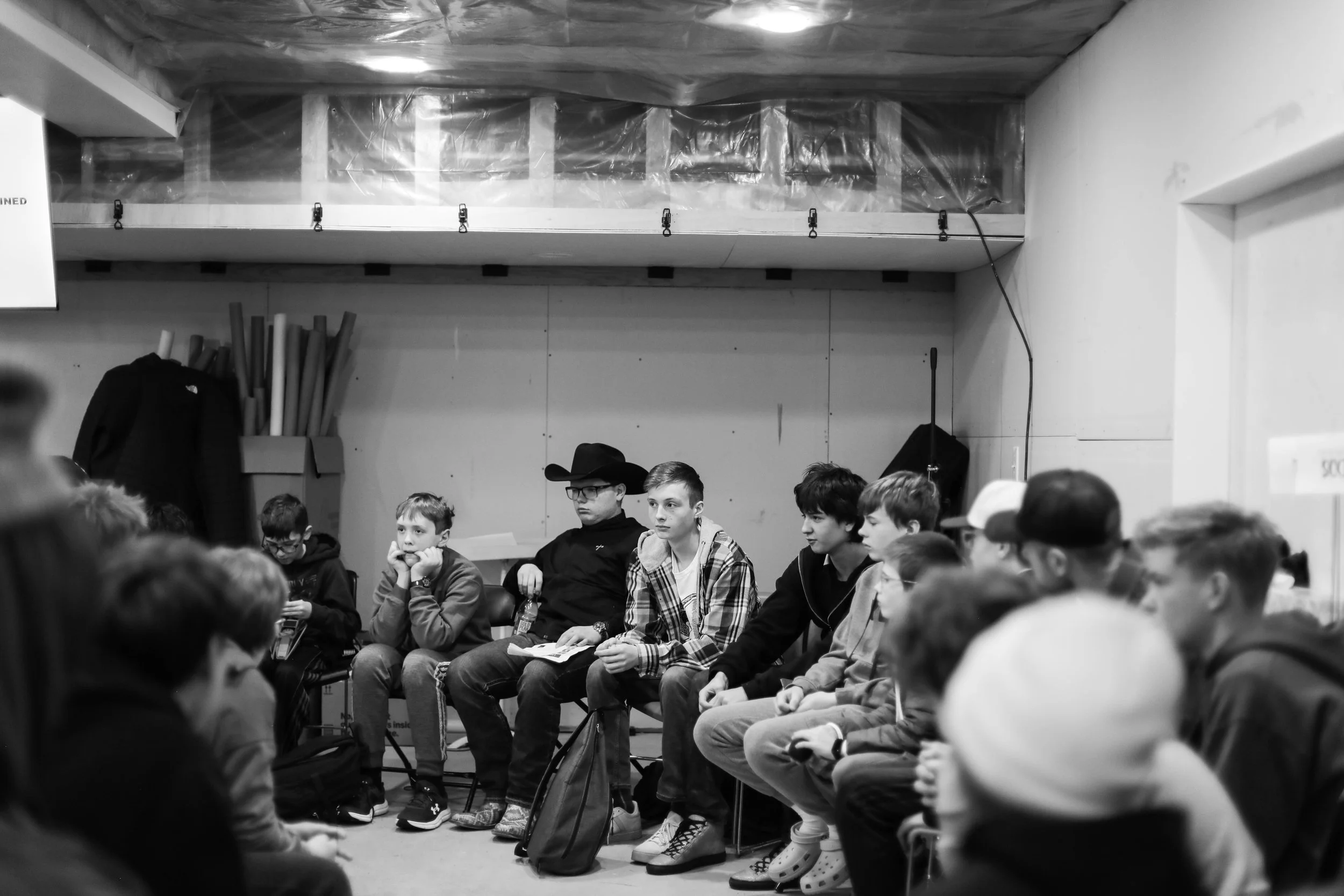
“Youth Group Culture” is a word I have been throwing around a lot with students as well as peers who are interested in investing in teenagers. I use it often, and I have noticed it is rarely in a positive context. In my years of observing “Youth Group Culture,” there is one thing I have caught onto in the last few years that truly perplexes me. And that is the obsession with youth ministry and “decisions.”
Decisions. That is the invaluable resource in youth ministry circles. In your town, there is a church that is planning an event, and they are eagerly awaiting to count “decisions” in order to measure the success of the event. Before you think I am just being cynical, I will be the first to say I also love decisions. When I pray with a student and they are deciding to repent of sin or follow Christ through salvation, it is quite literally the best moments of my life. And if we have an event and there is a soul saved, you better believe I tell everyone I know. But the decisions are not my barometer for success. We have had events that I and my ministry team would deem successful, but there were no salvations and students decided to not repent of sin. But unfortunately as a ministry leader, there is a strange validation that comes from decisions. Which is why we see the emotional roller coaster and the reliance on “experiencing” ministry.
On a sensory level, if people are having fun or enjoying doing something, they will invite their friends. And I agree and support this. But what if I told you loud, exciting music and elaborate games are not the most sustainable method for fun? Or what if I told you that seasons of prayer don’t have to be sad? To combat the emotional entertainment model, I want to propose some alternative ideas.
1) Turn the lights on.
I know I sound like an old man, but I want to remind you that the word of God is your greatest resource especially in youth ministry. If your student can’t read their Bible or take notes, they will be less likely to engage. Not to mention, many students in 2026 live fairly busy lives. In these dark rooms, you run the risk of having to wake students up. But this also says that whatever we need to bring to the Lord can be done in the light. Nerf wars, laser tag, games, etc can be done in the dark no problem. But there is something about being able to see and interact with the word of God that makes your time more rich.
Big picture my point is this: stop relying on senses to get the kids to enjoy things. We love to read the story of Shadrach, Meshach, and Abednego to teens and ask them to not compromise with the world. But their crime was not bowing down to the idol of Nebuchadnezzar. This golden idol was surely quite the sensory experience. The statue was massive, and the king had his own praise band to add to the experience.
Dan 3:10-12 KJV - 10 Thou, O king, hast made a decree, that every man that shall hear the sound of the cornet, flute, harp, sackbut, psaltery, and dulcimer, and all kinds of musick, shall fall down and worship the golden image: 11 And whoso falleth not down and worshippeth, that he should be cast into the midst of a burning fiery furnace. 12 There are certain Jews whom thou hast set over the affairs of the province of Babylon, Shadrach, Meshach, and Abednego; these men, O king, have not regarded thee: they serve not thy gods, nor worship the golden image which thou hast set up.
The boys knew it was all a joke compared to the actual God they knew and loved. And their greatest interaction with the Lord was in a fiery furnace which I'm sure was not fun. Students are looking for a faith that will take them past high school. When they are alone in their car or dorm room, they won’t have the hype of their youth ministry any more. What will they have when the lights are on and the music is off?
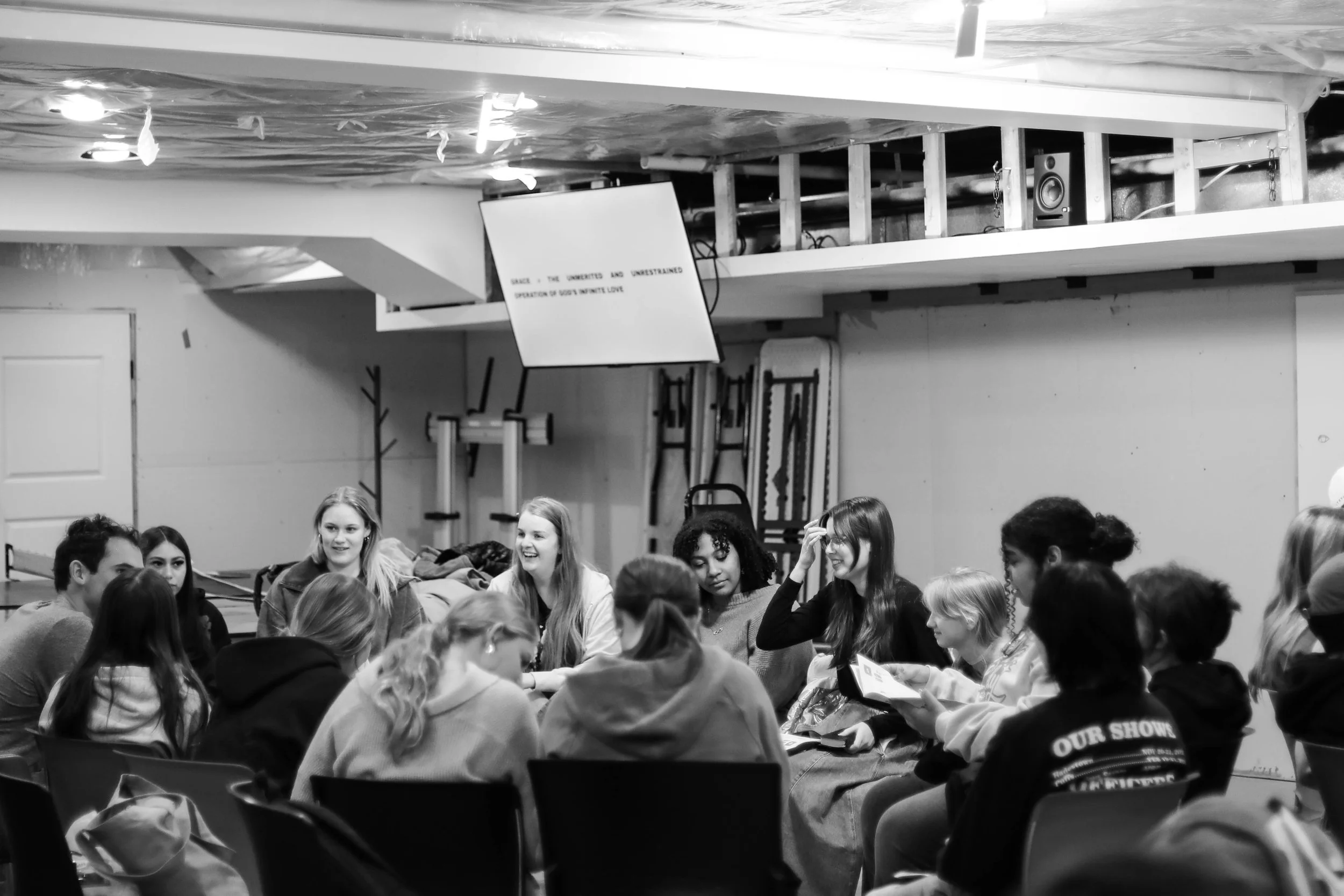
2) Let the word of God be true.
Isa 55:8-11 KJV - 8 For my thoughts are not your thoughts, neither are your ways my ways, saith the LORD. 9 For as the heavens are higher than the earth, so are my ways higher than your ways, and my thoughts than your thoughts. 10 For as the rain cometh down, and the snow from heaven, and returneth not thither, but watereth the earth, and maketh it bring forth and bud, that it may give seed to the sower, and bread to the eater: 11 So shall my word be that goeth forth out of my mouth: it shall not return unto me void, but it shall accomplish that which I please, and it shall prosper in the thing whereto I sent it.
For service or small groups, I recommend leaning on the word of God to communicate what God wants to say. Many people speaking to youth have deep convictions and burdens for how teens should be living. But there is a fear they won’t be taken seriously. I would say based on experience, teens know when they are being lied to, and they know when something is not important. Every youth leader has a clever story or personal experience they want to interweave into a lesson and that’s fine. But what students want is to hear what God has to say. And the best way to communicate that is through reading the verse directly through exegesis. When a student asks a question or seeks advice, an honest real life answer is valuable. But when that advice supports what the word of God is saying, it's extra effective.
This helps my team understand the definition of success when it comes to events. We have had events where there are no “decisions.” But we are able to leave the event knowing we presented the Word of God to the people of God. The gospel was shared, and we allowed time and opportunity for prayer. All of this and no kids getting hurt or going missing make for a successful event.
It's the word of God being presented that will change kids' lives. It will reveal sin. It will invite them into salvation. It will get them to love their family. Our most creative messages will never be able to do what the word of God can do.

3) Release yourself from being cool.
1 Co 9:22 KJV - 22 To the weak became I as weak, that I might gain the weak: I am made all things to all men, that I might by all means save some.
Greetings, fellow kids. You hereby have permission to not dress like a 17 year old. You do not need to know who the kids are listening to. You do not need to understand their vocabulary. The students who seek me out for investment do not do that because of my coolness. I am in my 30’s, and I dress and speak like I’m in my 30’s. But students want my investment because I am willing to be with them.
This means I am willing to meet up at Taco Bell and work through sin issues. We can meet at a coffee shop and talk about the word of God. I will make time for them after service for whatever the need is. I ask students how they are doing and want to know the honest answer and will love them regardless of whatever is going on in their heart. I also listen, even though my hearing gets worse and worse. But I listen and I ask questions. And I allow the word of God to be real in my life, not just a thing I do for my job.
Students want honesty, and they don’t want you to be a hypocrite. The students I invest in come over and play board games with my wife and I because I want them to see my messages about marriage line up with how my marriage actually looks. I would say an honest and blameless dork is significantly more effective in youth ministry than the aesthetically pleasing one. You do not have to know right away what the new jargon is. If you spend time with them, they will tell you and they actually don’t need you to try and say it.
Genuine relationships in the ministry will also allow for fun to happen. If my youth ministry is staffed with intentional and fun people, students will have fun.

4) Be patient.
2Ti 2:6 KJV - 6 The husbandman that laboureth must be first partaker of the fruits.
I have never attempted farming, and every garden I have ever started died. But I would imagine there is an element of waiting that can be unbearable. And as the seeds are sown into the earth, I would imagine the farmer has to watch the crop go through storms, hot days, floods, etc. Similarly the patient youth pastor has to be willing to preach messages where no decisions are made. The patient youth counselor has to have the Bible study where every student is tired and lifeless. But the farmer trusts that the seed sown will one day have a yield. Many times all the youth leader can do is show up, be intentional, and have a Bible ready. And if that is done faithfully, the fruit will show itself one day. “Decisions” can be incredibly validating. But the value of the work is not always reliant upon that.
All of this to say, in the Living Faith Fellowship, there are churches that have youth ministries. And our youth ministries are seeing disciples made. I have confidence that a majority of our students that have graduated are serving and ministering in local churches as college students and young adults. I am not an expert, nor do I claim to be. I have seen students leave after one visit and through the grapevine, hear that they absolutely hate how we do ministry. And that’s okay because there is a level of sustainability that comes from the removal of the “experience” and a reassurance that God is the one doing the work.

Montana Rex leads the Student Ministry at Living Faith Lee’s Summit in Lee’s Summit, MO.