Being Undocumented in the U.S.
Currently in 2026, the topic of immigration is in the news and in people's minds due to the tragic events that took place in Minneapolis. The current administration is boldly enforcing immigration law and making a big push to deport a large population of undocumented immigrants here in the States. This has created a lot of fear in those that are undocumented, their relatives, and their friends. Times like this can raise questions as to how Bible-believing Christians should approach this topic and how they should treat undocumented immigrants. The Bible has answers to such questions and provides Christians, that are undocumented, a way forward. It is my goal within this writing to shine a light on undocumented Christians from my personal experience as one. Additionally, it is also my goal to describe the difficulties that come with being an undocumented immigrant and to share ways that the church can help from with biblical principles.
As Christians we are held to a higher standard: the Bible. The moment we believed on the Lord Jesus Christ as our sin bearer, our savior, and Lord, we implied that whatever He called us to do, wherever and whenever, we would obey. We show our love to Jesus Christ through our obedience, even in the topics of immigration. If you are reading this and you are not a Christian, I beg you to consider the gospel. Jesus, the Son of God came down to live a perfect life, to die for your sins on the cross, and He did die and was risen from the dead by God thus defeating death and sin. The Bible tells us that only in Jesus can we have eternal life and true peace. Rejecting the gospel is remaining in your sins and being willing to be eternally separated from God. Having said that, concerning immigrants, it is very important to understand that each immigration story is different. The circumstances, the difficulties, and complexity varies from person to person. It is my hope that my story brings hope to those that are undocumented and helps the church to better minister to those that are undocumented.
I was born in Guatemala City and raised in a small coffee town called La Union in the department of Zacapa. I had a great childhood until I did not. My family was well known, and it gave me a certain sense of pride knowing that my last name meant something. We had everything we needed: we had land, cars, and property. God was mentioned in our family, and we would have considered ourselves Christians. My parents, though, had marriage issues, and it made me grow up a lot sooner. A hurricane affected the roads in which my father conducted his business. All of this led to my family almost being broken. I remember that time as one where there was no peace at home, and I even remember debt collectors coming to my house to ask if my parents were home.
My parents made the decision to move to the States looking for hope for their lives and finances, and longing for peace. After spending a year living with relatives in Guatemala, I was reunited with them a year later in Kansas, where I would start a new life. I started middle school there where I learned to speak English and started to love learning, thanks to an algebra teacher. I discovered that I was undocumented when I asked my mom if I could get my driver's permit like my classmates were doing. She explained to me why I could not and unpacked what it meant to live here. From there I started to fear the police and live in fear overall. I remember thinking that the police could detect that I was illegal.
In high school, I received my first fake Social Security card and fake green card to work. I remember getting my first paycheck and seeing taxes, Medicare, and Social Security being deducted. I viewed that as the cost to be able to work, although I would never see any benefit from it in the future. Life was great by the time I got to my senior year in high school. I had won a science fair, was dating an American girl I thought I would marry, had received a grant at my local community college — and then came Trump. I remember the night he was elected and my heart hating him for talking poorly about the Hispanic community. But I had a plan to get married and that would grant me legal status. By the time I was in my first year of college, that relationship broke off, and I had to face the reality of not having hope to be legal. I was studying to get a degree I would never be able to work with in a country where I was not wanted. I was heartbroken and dealing with a heavy conscience from all the immoral choices I had chosen. And at that time, I decided to turn to God.

My first time at Midtown Baptist Temple was at the Tuesday night prayer group. I remember being greeted with love; people were eager to listen to me. There I met Jorge, whom I consider a God-send, and we became friends. He was older than I was and had lived through similar things. He was from Mexico, and his family also had migrated to the States when he was younger. He was undocumented until he received DACA (which I did not qualify for). I had a Hispanic Christian role model who understood me and the heaviness of being undocumented. He prayed with me on July 13, 2018, when I gave my life to Christ. He deeply cared that I would be a godly follower of Christ. He introduced me to Romans 13:1-2 after church. I remember reading and hearing what he was saying. God had written that, as a follower of Jesus, I had to obey the law of the land. And if I didn't, I would be receiving damnation and would be guilty of the consequences. This was hard. How dare he tell this to me? This meant I could not drive, and I could not work using my illegal documents.
Scripture tells us that all power belongs to God (Ps 62:11; Rom 13:1). Additionally, God calls us to respect those in power and obey laws regardless of any political party (Titus 3:1; 1Pe 2:13-17). Christians pray to God for him to intervene if any power is not allowing us to live a quiet and peaceable life; in other words, we complain to God when we see injustice, entrusting him with justice and results since he is the Judge over all (1Tim 2:1-3). The object of our obedience is God, and we bring God honor by obeying, because when we obey, we are actually trusting God and not men, which is the whole point. There is not a person in power, nor a government, without God allowing it to exist. This placed me at odds because I was working illegally, and I knew it, and I was using illegal means to do so, and I knew that as well. If I chose to resist what God was telling me, then I would be in the wrong. My disobedience to God would lead me to disobey the government about my life, and God would allow me to reap the consequence. But at the same time, God admonishes us that if we do good, then we don't have to fear, and that will allow us to have a clear conscience (Rom 13:3-5). My very presence was already unlawful, but I decided to obey what I could control first, which was my employment. None of this was easy, and it was counterproductive to the way I had to get by as an undocumented immigrant. But by deciding to quit my job because I was using illegal documents, I was telling God that my trust was on him moving forward. One step of obedience is so much better than not obeying at all, and God can use it and lead us to make more steps. I decided to quit my job, and my parents were willing to support me since I was in college. But as the time passed and I wanted to work, I came to my Bible study leader, Andrew, and explained to him my situation. He said he would talk to the pastors. Here, I saw Proverbs 11:14 being lived out in my church for me.
"Where no counsel is, the people fall: but in the multitude of counsellors there is safety."
I was counseled to open a business, and I became a contractor of all types of things. The goal was that I would not lie about my status and could be honest and pay taxes in a legitimate way. And then God answered my prayers by bringing into my life my now wife, the most beautiful, kind, godly woman. I was upfront about my status and my intentions to marry her. I wanted to be honest and upfront without hiding anything, and I'm grateful that she accepted me without judgment.
God took care of me trying to live out Romans 13. He gave me scholarships while I was in school despite being undocumented. God provided me work where I did not have to lie anymore, jobs at the right time, and God made the money last despite low wages. God taught me that everything that I would need he would provide, but it was hard to believe on certain days (Mat 6:32-33). After getting married, during my adjustment of status, I was pulled over for the first time, I had to get a lawyer to petition the judge for grace until I received my license. God granted me favor with the judge until I received my license, and Proverbs 21:1 was made a reality to me. In all the waiting, God gave strength to my heart (Psalm 27:14). Choosing his way was harder in a world that was already hard. But my conscience was clean because I was trying to obey his word and praying that he would make his word a reality, and He did.
My story was possible because my parents were willing to support me for a time. I understand that not everyone will have that possibility, but I can see that it was His provision for me. I believe that God will make a way for those that embark in the journey to obey Him according to Romans 13 because God loves strangers.
The word immigrant is not found in the Bible, but God uses the term “stranger” to refer to them. God does not use that term in vain, just like he doesn't use any other word in vain. God taught Israel in the Old Testament how they had to behave and treat the strangers/immigrants that would come into their land after Israel had been slaves in Egypt. Although the verses that God uses to speak to Israel were historically applicable to Israel at that time, we can learn certain inspirational truths that we can apply to the church age regarding how to minister to immigrants, including those illegally in the country.
The heart posture that we must carry to minister to immigrants: Exodus 23:9 & Ephesians 2:12-13
The historical application (Exo 23:9) was that Israel knew exactly what it felt like to be a foreigner in a land. God was interested in their heart attitude as they would deal with immigrants in their land. But what do we do when we don't know how to minister to those that we have nothing in common regarding immigration? Remember what Christ did for you.
I find this verse (Eph 2:12-13) comforting because we can learn the lengths in which Christ went to reunite us to God by His blood. These verses teach us that before receiving Jesus as our Lord and Savior, all of us were strangers from God and His promises. Everyone outside of Christ has no hope in this world. Illegal immigrants feel like this with no hope, and they desperately need to hear of the hope which can be found in Christ. Let the fact that you were a stranger from God be the fuel which empowers you to build bridges with immigrants, legal and not legal, and to minister to them.
We must love immigrants as we minister to them: Leviticus 19:33-34
When immigrants come to our churches, our bible studies, and are hearing and engaging with the Word of God, they need to know and feel that they are loved and welcome there, regardless of their immigration status. This can be a very practical way to apply this verse that captures the heart of God that He wanted Israel to have as He taught them His law. I'm grateful that when I came to my church, I was loved by those that knew about my status. They did not see me differently, nor treated me differently. They loved me because they cared for my soul, and when I came to Christ, I sure felt like it was family.
The Holy Spirit and the sanctification of immigrant believers: John 16:7-8
As we minister to immigrants, we need to allow the Holy Spirit to work out their role in obeying the law of civil authority. The Holy Spirit will reveal to each individual immigrant believer their need to obey the government according to Romans 13. God will put a God-given conviction in their mind to the point that they cannot help but obey. It is only a conviction from God that would drive someone to obey in faith to do something so hard. I have walked with a dear brother in Christ that has a conviction to return to his country. My role has been to listen, to care, to encourage when they are down, and to speak the truth of God's word when they allow me to. The Spirit of God has transformed a heart of fear to a heart full of faith, trusting that God will provide for all His needs in his country.
Paul was willing to be all things to all people to minister the gospel to those that needed it (1 Cor 9:20-22). My prayer is that we would approach immigrants this way in our churches — for our churches to meet immigrants with love and compassion in order to deliver the gospel because God loves them.
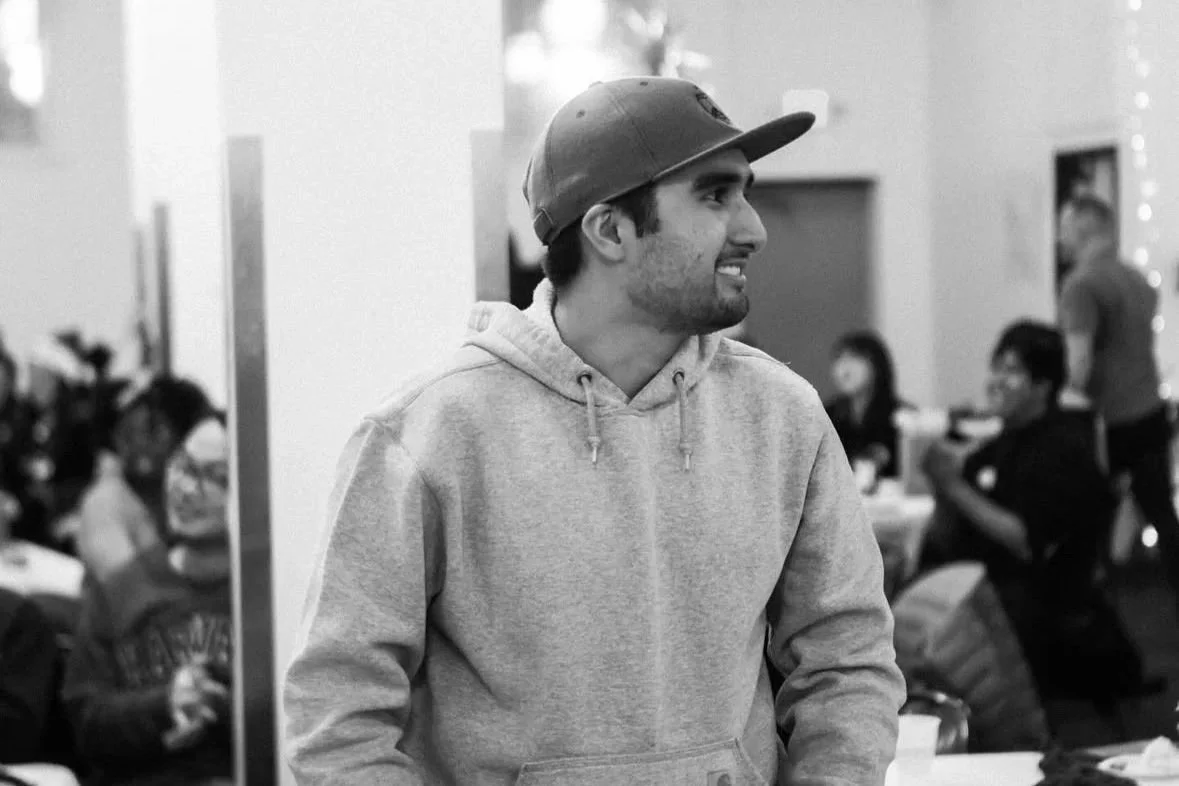
Andy Cardona is a leader at Midtown Baptist Temple in Kansas City, MO and serves in the College and Young Adults ministry.